
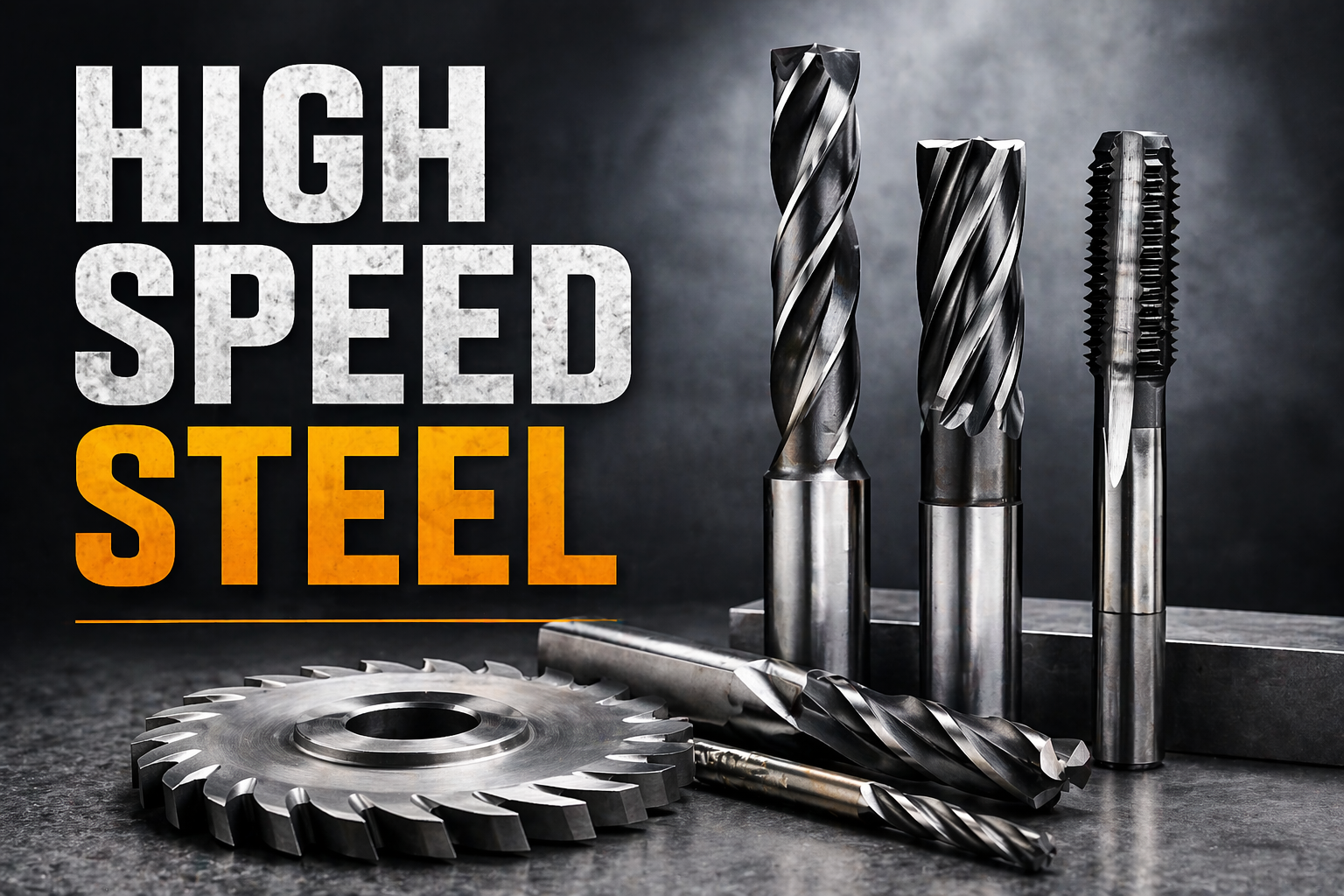
High Speed Steel (HSS) is one of the most widely used materials in the manufacturing and tooling industry. Known for its exceptional hardness, wear resistance, and ability to withstand high temperatures, HSS plays a crucial role in modern machining and industrial applications.
Unlike regular carbon steel, HSS maintains its strength even at elevated temperatures, making it ideal for cutting and drilling operations. In this guide, we will explore everything about high speed steel, including its properties, types, applications, and advantages.
Key Properties of High Speed Steel
HSS offers a unique combination of mechanical and thermal properties:
🔹 High Hardness
HSS can achieve hardness levels up to 60–65 HRC, making it ideal for cutting tools.
🔹 Excellent Heat Resistance
Maintains hardness even at elevated temperatures (up to 600°C).
🔹 Wear Resistance
Provides long tool life due to resistance to abrasion.
🔹 Toughness
More resistant to breakage compared to brittle materials like carbide.
🔹 Red Hardness
Ability to retain hardness even when the tool becomes red hot during operation.
Grades of High Speed Steel
High Speed Steel is mainly divided into three grades:
- M2 Steel or W.NR. 1.3343: General-purpose HSS
- M35 Steel or W.NR. 1.3243: Contains cobalt for better heat resistance
- M42 Steel or W.NR. 1.3247: High cobalt content for extreme performance
Chemical Composition of HSS
HSS contains a combination of elements such as:
- Tungsten
- Molybdenum
- Chromium
- Vanadium
- Cobalt (in some grades)
These elements enhance hardness, wear resistance, and heat resistance.
Industrial Applications of HSS Steel
High Speed Steel is widely used across various industries due to its versatility:
- Cutting Tools: Drill bits, Milling cutters, Reamers, Taps and dies
- Machining Operations: CNC machining, Turning operations, Precision cutting
- Aerospace Industry: Precision components and High-performance tooling
- Manufacturing & Engineering: Metal fabrication and Industrial tooling
Future of High Speed Steel in Industry
Despite the rise of carbide and ceramic tools, HSS continues to be widely used due to its versatility, affordability, and ease of maintenance. It remains a critical material in industries where precision and cost-effectiveness are key.
Final Thoughts
High Speed Steel (HSS) plays a vital role in modern manufacturing and machining industries. Its excellent combination of hardness, toughness, and heat resistance makes it an indispensable material for cutting tools and industrial applications.
By understanding its types, properties, and uses, businesses can select the right HSS grade to improve efficiency and productivity.