
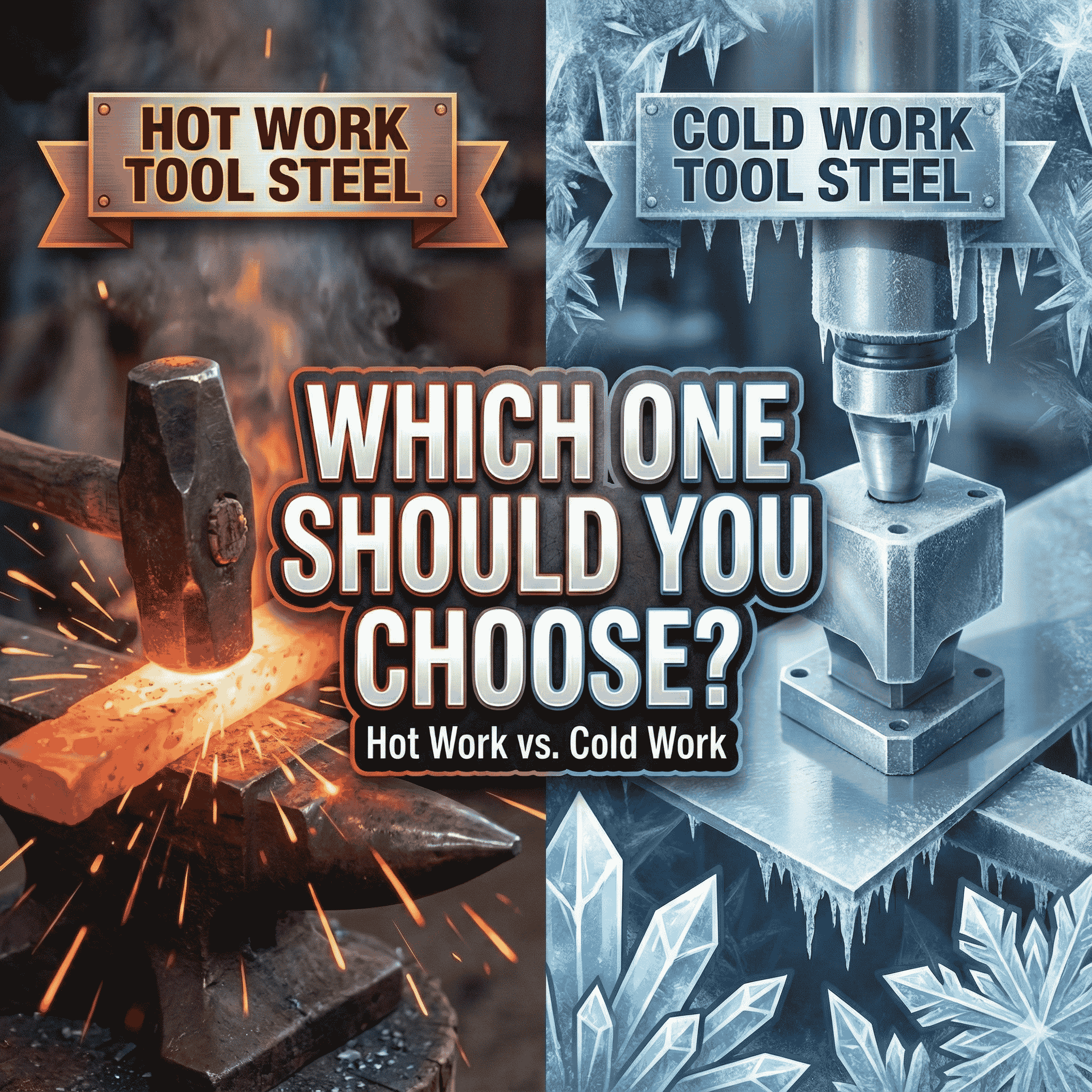
Choosing the right tool steel is very important for every industry. Because it makes tools last longer, work well every time, and need less fixing. So the selection of the right work tool is very important.
Both types have their own benefits and are made for different jobs. In this article, we will explain key differences so you can pick the best one for your work.
What Is Hot Work and Cold Work Tool Steel?
Hot Work Tool Steel: In simple language, we can say hot work tool steel is specifically engineered to operate in high-temperature environments, generally above 200°C.
Common Grades:
- H11, H13, H21
Cold Work Tool Steel: Cold work tool steel is used for applications that operate at room temperature or slightly elevated temperatures, usually below 200°C.
Common Grades:
- D2, D3, A2, O1
Major Differences Between Hot Work and Cold Work Tool Steel
Hot work and cold work tool steels are both used in manufacturing, but they are designed for very different working conditions. Understanding these differences helps you choose the right material for longer tool life and better performance.
1. Operating Temperature
Hot Work: Designed to perform under high heat (above 200°C).
Cold Work: Best for room-temperature or mildly heated operations(below 200°C).
2. Wear vs. Heat Resistance
Hot Work: Moderate wear resistance because the main priority of this steel is heat tolerance.
Cold Work: Very high wear resistance due to higher hardness.
3. Applications
Hot Work: Die casting dies, Hot forging dies, Extrusion dies, Hot shear blades, Pressure die-casting molds
Cold Work: Punching and blanking tools, Thread rolling dies, Cutting tools, Forming rolls
4. Alloy Composition
Hot Work Steels: Contain Cr-Mo-V to withstand high temperatures.
Cold Work Steels: Higher carbon and chromium for enhanced hardness and wear resistance.
5. Toughness
Hot Work: Higher toughness to endure thermal shocks.
Cold Work: Higher hardness but lower toughness at impact
How to Pick the Right Steel Grade?
The selection of the correct tool steel depends on the application, working temperature, required hardness, and tool life expectations.
Choose hot work tool steel when:
- Temperature above 200°C
- The tool is exposed to hot metal
- You need thermal shock resistance
Choose cold work tool steel when:
- Temperature remains below 200°C
- You need sharp edges and extreme wear resistance
- Examples: shearing tools, blanking dies, metal cutters
Conclusion:
At Sandeep Edgetech, we provide a complete range of premium hot work and cold work tool steels to support every industrial requirement. Whether you are into forging, stamping, cutting, die casting, or extrusion, we deliver the right steel grade with consistent quality and reliable performance. Contact us today.