
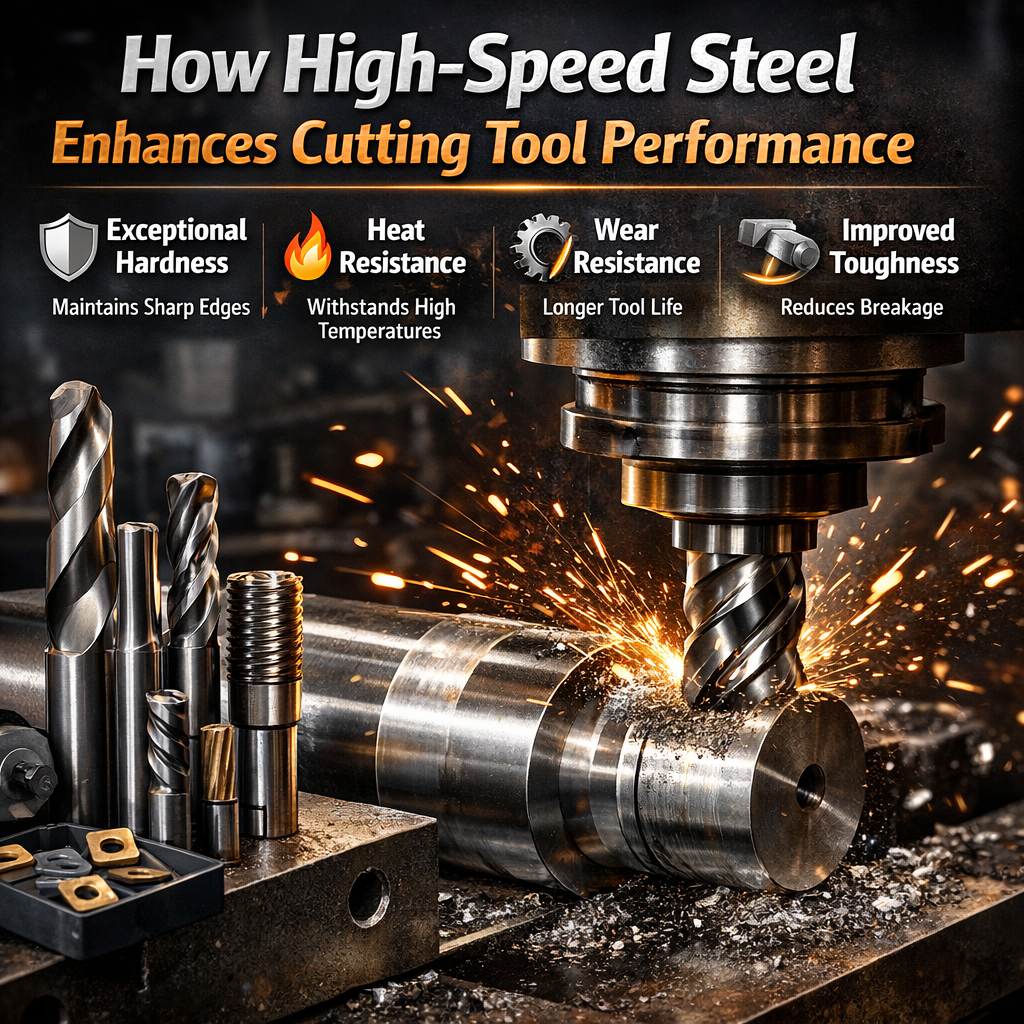
High-speed steel (HSS) is essential in modern machining and manufacturing due to its outstanding hardness, heat resistance, and durability. These properties enhance the efficiency and longevity of cutting tools. Industries such as metal fabrication, die manufacturing, and precision engineering depend on trustworthy high-speed steel suppliers and manufacturers to maintain consistent quality and performance in their operations.
A major advantage of high-speed steel is its ability to retain hardness at elevated temperatures. During machining, cutting tools are subjected to intense friction and heat, which can cause ordinary steel to soften. In contrast, high-speed steel preserves its sharp cutting edge under these conditions. Grades such as 1.2343 high-speed steel are popular in demanding machining applications due to their excellent wear resistance and thermal stability. This enables cutting tools made from HSS to operate at higher speeds without compromising efficiency.
Another significant benefit of high-speed steel is its superior toughness. Cutting tools frequently endure heavy loads and impacts during processes like drilling, milling, and turning. High-speed steel minimizes the risk of tool breakage, promoting smoother production and reducing maintenance costs. Manufacturers collaborating with tool and die steel supplier networks often pair high-speed steel tools with advanced die materials to enhance precision and boost productivity.
High-speed steel also provides excellent abrasion resistance, which is crucial when machining hard materials like alloy steels and cast iron. Advanced grades, such as W.NR. 1.2344ESR steel, offer superior wear resistance and strength, making them ideal for precision cutting applications where tool longevity and accuracy are vital.
In many industrial setups, cutting tools made from high-speed steel are often used in conjunction with materials sourced from hot work steel and cold work steel suppliers. This combination enables manufacturers to meet diverse production demands, ranging from high-temperature forging processes to precise cold-forming operations, ensuring versatility and efficiency across various manufacturing applications.
Another advantage of high-speed steel is its versatility. It can be easily shaped, sharpened, and re-ground, enabling tools to be reused multiple times without a significant decline in performance. This makes HSS a cost-effective choice for industries with continuous machining needs. Additionally, companies often source complementary materials from D2 steel manufacturers in Delhi to support applications requiring exceptional wear resistance.
Finally, the quality of high-speed steel tools depends heavily on the expertise of the material provider. Working with the Best steel manufacturer in Delhi ensures access to premium grades, consistent material properties, and reliable supply for industrial applications.
In conclusion, high-speed steel significantly enhances cutting tool performance through its superior hardness, heat resistance, durability, and versatility. These attributes make it an essential material in modern manufacturing, helping industries achieve greater precision, extended tool life, and increased productivity.