
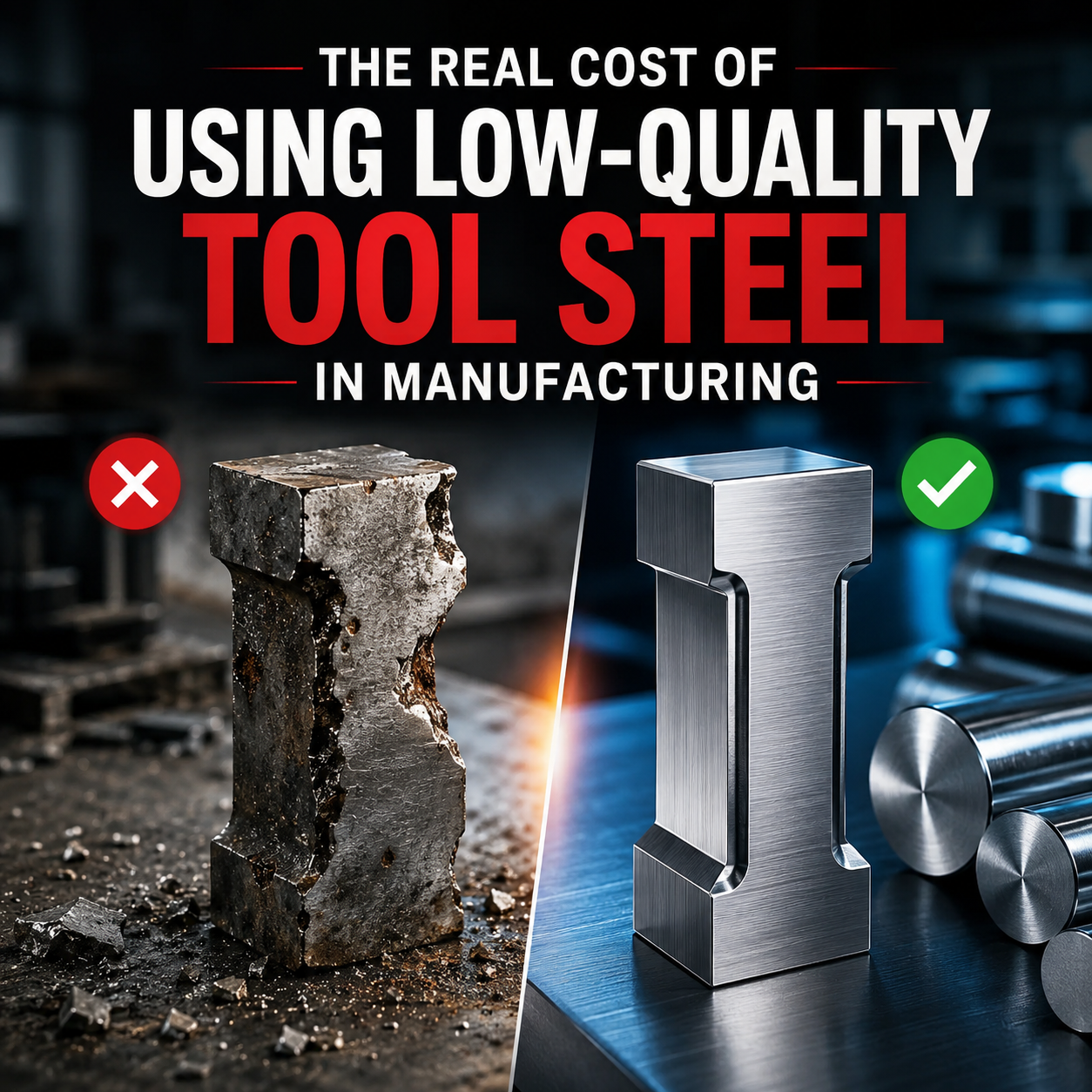
Every manufacturer looks for ways to reduce production costs. But when it comes to tool steel, choosing a cheaper option can often become the most expensive decision in the long run.
At first glance, low-quality steel may appear to offer immediate savings. However, hidden costs such as frequent tool replacement, production downtime, poor surface finish, and inconsistent product quality can quickly eat into profits. In many cases, manufacturers end up spending far more on maintenance and rework than they initially saved on material costs.
We have seen how the right steel investment helps industries improve productivity, extend tool life, and achieve consistent manufacturing results.
The Hidden Price of Poor-Quality Steel
A tool is only as good as the material it is made from. When inferior steel is used, the effects are often visible throughout the production cycle.
1. Frequent Tool Wear and Replacement
Low-grade steel typically lacks the hardness and wear resistance required for demanding industrial applications. As a result, tools wear out faster, lose dimensional accuracy, and require frequent replacement.
This is why manufacturers prefer sourcing from a trusted tool and die steel supplier that can provide reliable, performance-driven materials designed for long service life.
Increased Machine Downtime
Every time a tool fails unexpectedly, production comes to a halt. Machine downtime not only affects output but also disrupts delivery schedules and increases labor costs.
For applications involving stamping, cutting, and forming operations, working with a dependable cold work steel supplier helps reduce tool failures and maintain smooth production flow.
Poor Surface Finish and Product Quality
Low-quality tool steel often contains inconsistencies that affect machining performance. This can result in rough surfaces, dimensional variations, and defects that require costly rework.
In industries such as injection molding and die manufacturing, businesses rely on an experienced plastic mould steel supplier to ensure superior polishability, precision, and consistent product quality.
Higher Maintenance Costs
The true cost of inferior steel becomes evident over time. More tool repairs, additional machining operations, and frequent maintenance all contribute to rising operational expenses.
Premium grades such as 1.2344 steel are widely used because of their excellent toughness, thermal stability, and resistance to wear, making them ideal for demanding manufacturing environments.
Similarly, 1.2379 steel is valued for its high hardness and durability, helping manufacturers reduce maintenance requirements and improve overall productivity.
Reduced Production Efficiency
When tools wear out quickly, operators must constantly adjust machining parameters, inspect components, and replace damaged tooling. This slows production and reduces efficiency.
Manufacturers seeking long-term reliability often partner with a trusted mould steel supplier in Delhi that understands the performance requirements of modern manufacturing industries.
Investing in Quality Pays Off
While premium steel may have a higher initial cost, it delivers significant savings over the lifespan of the tool. Better wear resistance, improved machining performance, longer service life, and reduced downtime all contribute to a lower total cost of ownership.
Sandeep Edgetech provides high-quality tool steel, die steel, mould steel, and engineering steel solutions designed to meet the demands of today's precision manufacturing sector.
Case Study:
Previous grade → replacement grade → tool life → production cycles → downtime reduction.
Conclusion
The cost of low-quality tool steel extends far beyond the purchase price. From unexpected downtime and tool failure to poor product quality and higher maintenance expenses, the hidden costs can significantly impact profitability.
Choosing high-performance steel from a reliable supplier is not an expense it's an investment in efficiency, consistency, and long-term manufacturing success. With Sandeep Edgetech's expertise and premium steel solutions, manufacturers can achieve better performance while keeping production costs under control.